Generative Agents: Interactive Simulacra of Human Behavior
Joon Sung Park et al., 2023, ACM UIST
Social systems, like apps, games or cities, are hard to design: many problems only appear once lots of people are in them.
Simulated people could help, but they have been simple, following a few hand-written rules, like Schelling's shapes.
Language models can act human, but only in a single moment. Can agents built on them stay believable for days?
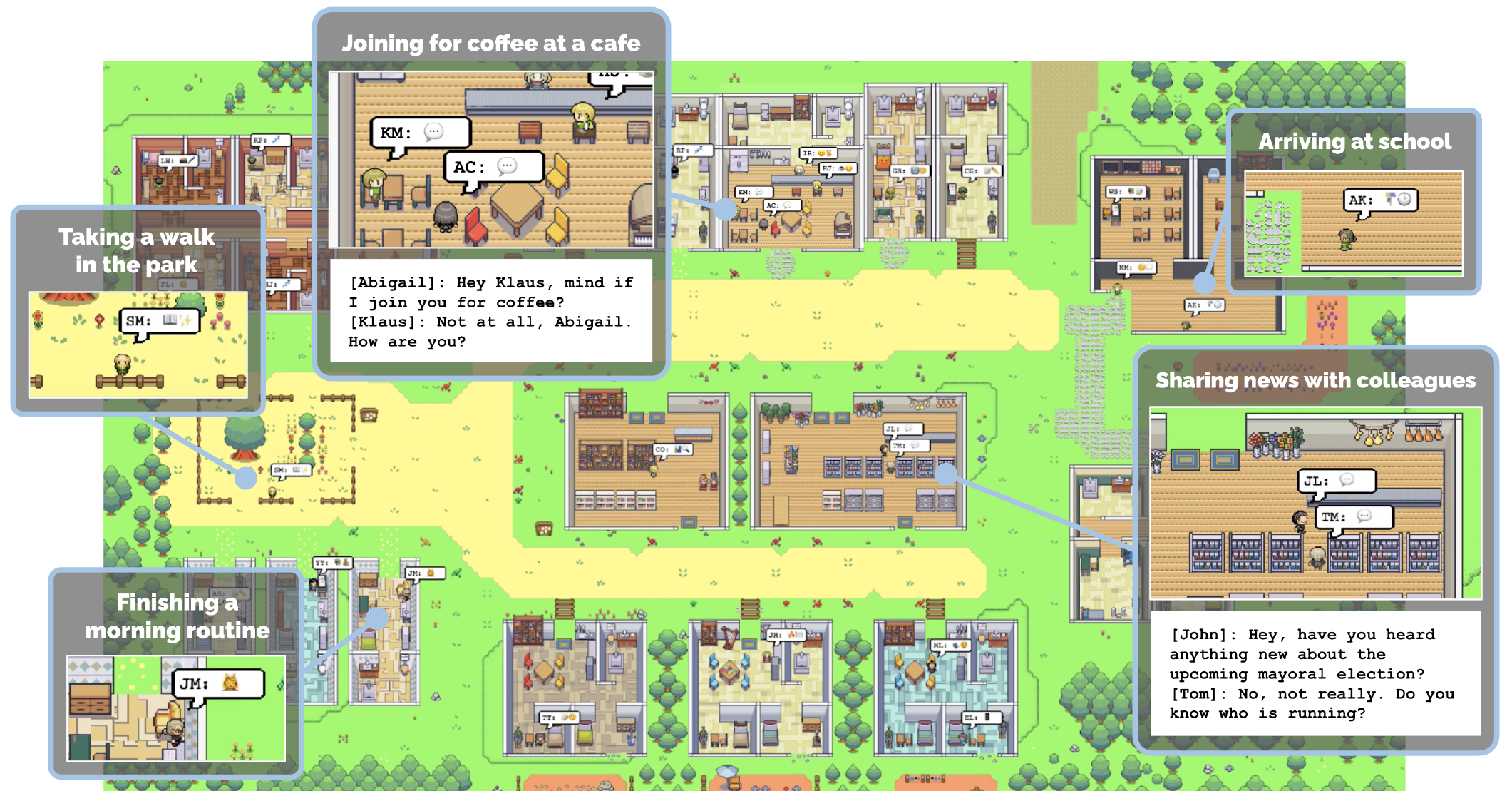
Figure 1
Figure 1: the town of Smallville
25 agents live in a small town, each from a one-paragraph biography.
They plan, notice, remember, reflect and talk.
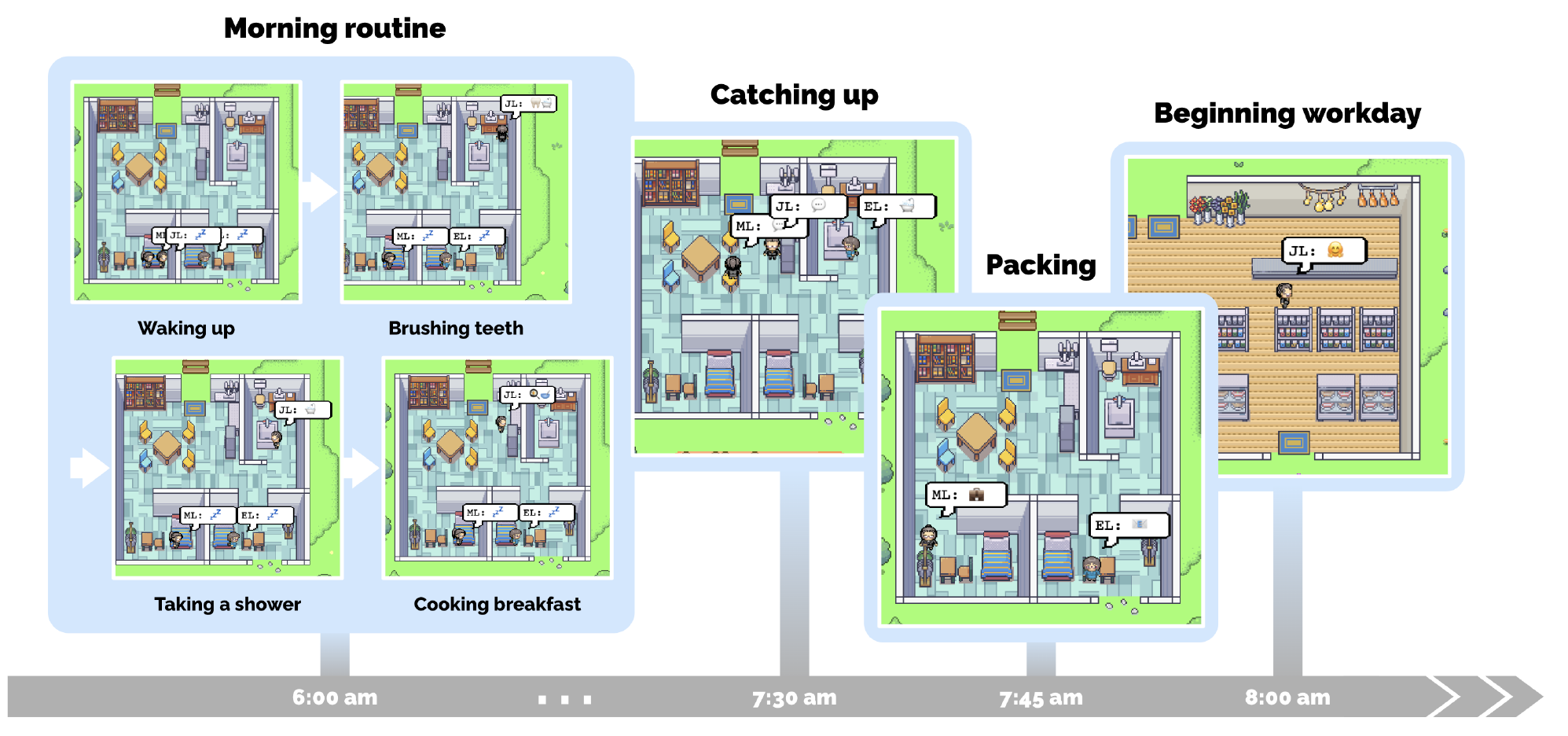
A morning in the life of John Lin
Figure 3, Park et al., UIST 2023
Smallville
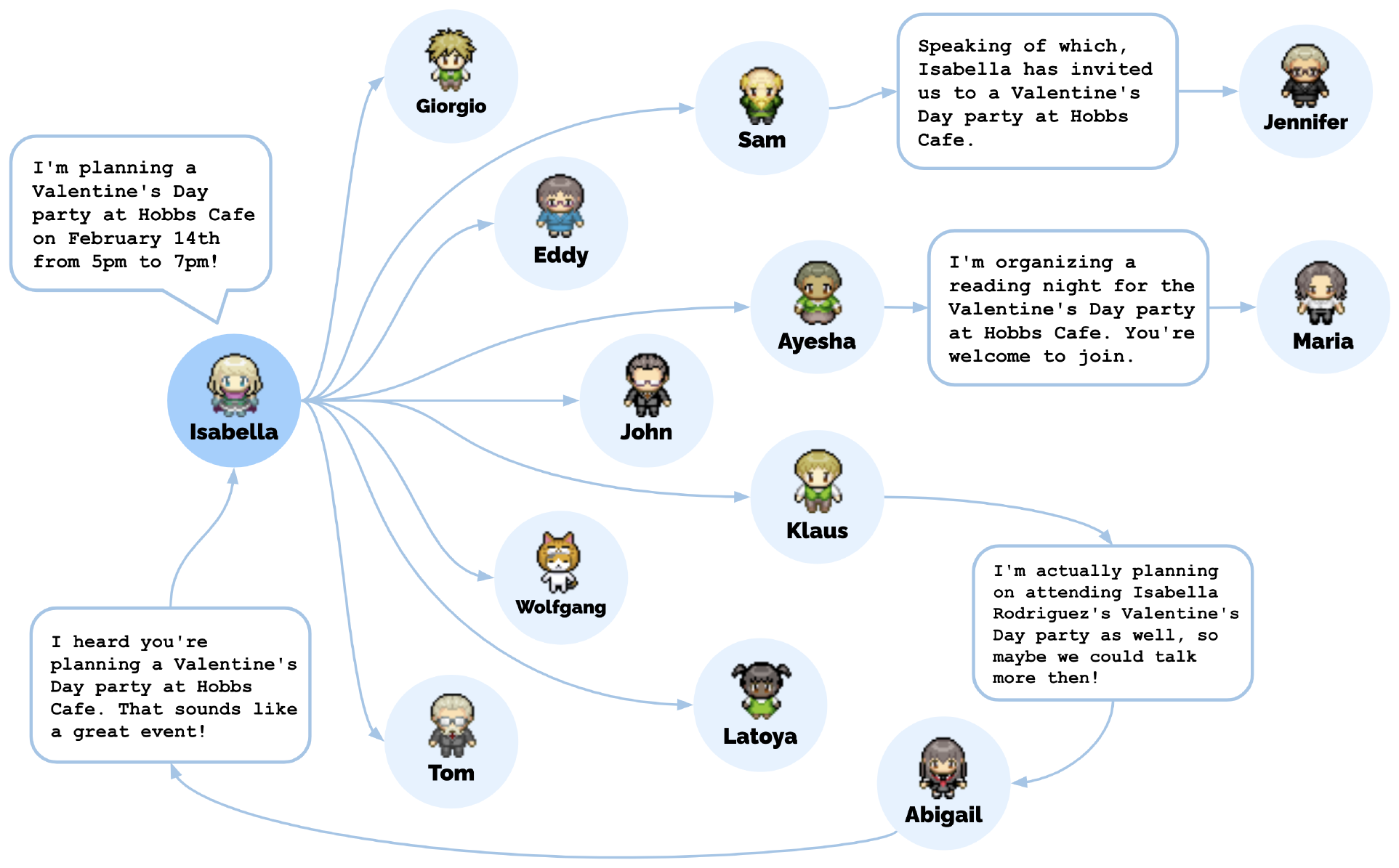
Figure 9, Park et al., UIST 2023: how news of Isabella's party spread
The whole town
The authors gave one agent, Isabella, the idea of a Valentine's Day party.
Over two game days, the agents who knew about it grew from 1 to 13 of 25, with no one stepping in.
Five of the twelve invited came.
Who heard, and who came, emerged from many separate conversations.
The big ideas of Generative Agents
Agents that remember, reflect and plan behave believably over days, not just in one reply.
From one agent's idea for a party, the town's social life emerged: invitations spread, dates were made, and guests showed up together.
The result: the full architecture was the most believable
100 people ranked agents' answers to interview questions about their lives. Each kind of memory taken away made the answers less believable.
The paper also found answers that weren't believable: retrieval misses, when an agent failed to recall something it knew, and embellishments, details it added that weren't in its memory.
Discuss with your table
To what extent did you find the model believable? To what extent did it not?
What would be interesting to simulate with agents like these, and how might you need to extend the model?
Should agents like these ever stand in for real people when testing a design or policy?
Appendix
1
The world is a grid
Every place an agent can go is a node in a tree: the town, a building, a room, an object. The real map has 19 sectors, 63 arenas and 222 objects.
2
Steps and walking
Each step is 10 game seconds, and an agent walks at most one tile per step. Routes are shortest path, found using BFS.
3
Plans determine actions
An hourly plan becomes detailed actions when each time block begins. Isabella follows those actions, walking to the right place first.
4
What an agent notices
Each step it looks around its room, within its vision radius, and attends to (notices) the closest few things.
5
Reactions and re-planning
Objects and people can make her react, have conversations, request replanning, and change the schedule.
6
New observations create memories and reflections
Agents start with seed memories and create new ones from plans, observations, and reflections, triggered at an importance threshold.
7
Retrieval ranks context for a task
Change the query or weights and watch memories move across the retrieval cutoff.
8
Actions are informed by retrieved memories
Agents retrieve memories for planning, reacting, reflection, and each conversational turn.
9
One full step
Everything the engine does between two ticks of the clock.
10
How reactions turn into decisions
Trace retrieved memories into the prompt, compare example answers, and see what the engine applies.
11
Reflections link to evidence for inspection
Choose a question, trace an inference to its evidence, then build a later reflection on earlier ones.
12
The inner voice
Give Isabella a thought, watch it enter memory, and see how it changes the rest of her plan.
13
Interviewing Isabella
Compare the same questions across four memory conditions. Hover a column or answer to inspect its memories.